Introducing AnonymizeReviewer: Remove Author Metadata from Word Docs Without Losing Edits
When you’re collaborating on a Microsoft Word document, tracked changes and comments are essential tools. However, when it's time to share those files outside your team, another concern often arises: the names behind every comment and edit are embedded directly within the document.
There are times when anonymity is important. Whether you’re simplifying client reviews, preparing materials for a broader audience, or just removing unnecessary distractions, Word doesn't make it easy to cleanly strip names without accepting all changes or removing valuable context.
To solve that problem, I created AnonymizeReviewer, a lightweight Python script that lets you anonymize Word files while preserving everything that matters.
Microsoft Word includes a feature called “Remove personal information on save.” While helpful in theory, it behaves inconsistently depending on your version and settings. It also doesn’t catch all the places author names can appear.
Here are some of the areas where Word stores author names:
Manually scrubbing each of these is time-consuming and prone to error. It’s easy to miss something. That’s why I built a more dependable solution.
AnonymizeReviewer reads the .docx file as a zip archive, scans its internal XML files, and replaces all instances of the original author name with a placeholder or alternate name of your choosing. It does this without altering the tracked changes or comments themselves.
Key features include:
First, clone the repository and install the Python dependency:
To run in interactive mode with file picker prompts:
To run with arguments:
To batch-process all .docx files in a folder:
Files that already end in “ - Anonymized.docx” will be skipped automatically to avoid duplication.
This tool originated from a real-world use case. I needed a way to hand off tracked-change documents for client review without exposing internal names. Word did not provide a clean solution, and most online options were either unreliable or required uploading sensitive files.
By targeting the actual structure of a .docx file and addressing all areas where names can be stored, AnonymizeReviewer fills that gap, giving you control over what you share.
The project is available on GitHub at https://github.com/gregvarghese/AnonymizeReviewer
Pull requests and feedback are welcome. If you have ideas for additional features, such as redacting specific comment content or cleaning embedded metadata beyond names, I would love to hear them.
This project is licensed under the MIT License.
The software is provided as is, without warranty of any kind, express or implied, including but not limited to the warranties of merchantability, fitness for a particular purpose, and noninfringement.
How to Extract SSL Certificates from a PFX File on macOS
If you’ve ever been handed a .pfx file and told to “just upload the certificate,” you know the pain that’s coming.
PFX (PKCS#12) files bundle your private key, SSL certificate, and any intermediate certificates into one encrypted file. That’s great until you actually need to extract those pieces for something like an NGINX server, AWS load balancer, or third-party CDN that wants them all separately.
MacOS has OpenSSL built in, which is all you need. Here’s a simple shell script I use to generate the cert, private key, and chain in one shot and make them clipboard-ready for easy pasting.
Save the following as extract-ssl-from-pfx.sh:
Make it executable:
Then run it:
Follow the prompts. You’ll end up with three files and the contents ready to paste one by one wherever you need them.
Your private key is sensitive. Please don’t leave it lying around. Store it securely or delete it after use.
This script saves me time every time I deal with certificates. Hopefully, it does the same for you. If you have improvements or tweaks, I’d love to hear them.
How to enable MacFuse/PCloud Drive on Mac Sonoma 14.2.1
I recently upgraded to Mac Sonoma 14.2.1 and MacFuse stopped loading which affected my ability to load PCloud and NTFS drives. I spent a few days trying to troubleshoot everything and in the end it turned out I had to disable Mac System Integrity Protection to get everything to load. I'm sharing in case it helps anyone else.
To disable SIP on your Mac Sonoma for extensions like MacFuse and pCloud Drive:
Note: Disabling SIP poses security risks. Re-enable it once you've installed the necessary extensions. Only disable SIP when necessary and understand the potential risks involved.
Installing font awesome pro with bun
After recently switching to bun.sh, I was trying to install Font Awesome Pro. It uses a private registry but their docs have not been updated to support non-npm package managers and bun does not yet support .npmrc files.
You can configure a private registry using an organization scope. First, you must get your auth token from your paid Font Awesome account by going to your account page, scrolling down to the Tokens section, and copying the token.
Copy and paste this string, and replace YOUR_TOKEN_HERE with the token you copied above:
Open the terminal and enter these commands:
Paste in the config above with your token and then hit CTRL+X to quit, and Y to save when prompted. Now you should be able to run
How to Delete Folder with Special Character in Windows 10/11
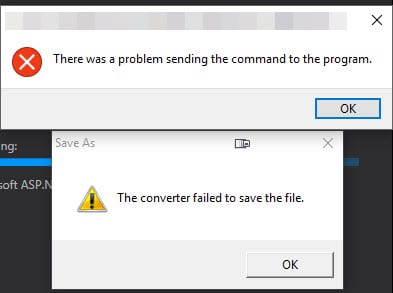
I ran into an issue where a folder was created by some application with a special Unicode character that Windows Explorer doesn't seem to play nicely with. I also was unable to tell what the character was since nothing would reveal it. The folder's there, but you can't rename or delete it. If I tried to remove or delete it, I'd get an error saying the folder doesn't exist:
I have LockHunter installed but it wasn't able to delete it for some reason. The easiest way I found to delete the folder was to use Git Bash and then use the appropriate commands to rename or delete the folder.
Browse to the folder where the offending folder is located. For example purposes, I'll use c:\temp\folder1
Rename:
Delete:
If you don't have Git Bash or are not a developer/power user, you can download the portable version from https://git-scm.com/download/win to use temporarily. Once you decompress the files to a folder, you'll find git-bash.exe which you can double-click to run and use the above commands.